On any given day in Chicago, you might pass by a mural celebrating a neighborhood’s history, overhear a conversation about upcoming community meetings, or see volunteers distributing food on a busy corner. This isn’t coincidence—it’s the daily rhythm of a city that refuses to ignore inequality. While Chicago is often photographed for its skyline or praised for its food scene, its deeper story is written in the work of people striving for justice.
This guide is an open door into that ongoing story. Whether you’re a lifelong resident or a newcomer eager to make a difference, you’ll find that Chicago offers countless ways to get involved in creating a more equitable city.
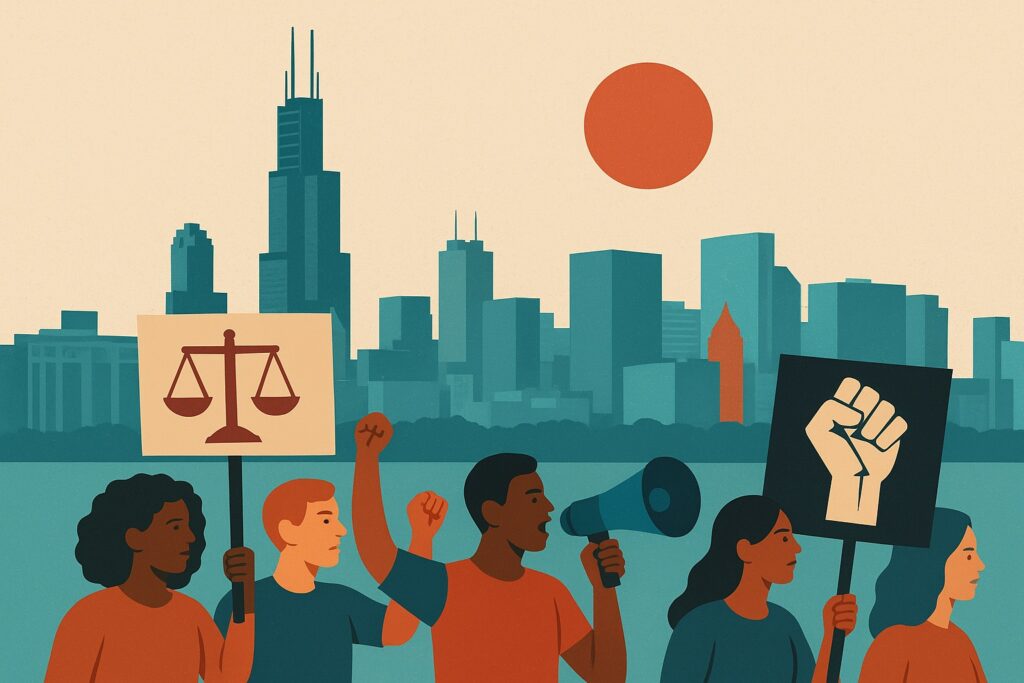
Chicago’s Place in the Fight for Justice
Chicago has a reputation for being bold. From the Pullman Strike of 1894 to the civil rights demonstrations of the 1960s, the city has repeatedly been a backdrop for movements that shaped national conversations. That legacy didn’t end decades ago—it’s still unfolding in the streets, schools, and council chambers today.
What makes Chicago unique is the mix of deep-rooted community activism and the presence of large-scale policy initiatives. Change here is rarely abstract; it’s visible in neighborhood programs, public art, and legislation shaped by citizen voices.
Key Challenges and Why They Matter
Social justice in Chicago doesn’t hinge on a single cause. It’s a web of interconnected issues, each affecting people in different but overlapping ways.
Housing affordability remains a pressing concern. As property values rise in certain areas, long-term residents face displacement. Activists are pushing for rent control, expanded affordable housing, and protections against predatory development.
Criminal justice reform is another front where progress is being pursued. Calls for greater transparency in policing, ending cash bail, and expanding restorative justice programs reflect a growing demand for systems that heal rather than harm.
Environmental justice is often less visible but equally urgent. In some neighborhoods, air quality and industrial pollution have been a quiet but devastating threat for decades. Community groups are pressing for cleaner infrastructure and more green spaces in areas that have long been overlooked.
Education, too, remains a cornerstone of advocacy. Campaigns for fair funding, culturally responsive curricula, and safer schools highlight the belief that access to quality education is a fundamental right, not a privilege.
And just as these larger issues affect daily life, so do everyday challenges—whether it’s maintaining safe housing, accessing reliable transportation, or even practical needs like finding trusted garage door installation. Each of these reflects how important dependable support systems are to community well-being.
Where Everyday People Make a Difference
It’s easy to think of social justice as something carried out by experts or politicians, but in Chicago, it’s often everyday residents who fuel the momentum.
Neighborhood meetings give locals a place to speak up about what’s affecting them. Volunteer opportunities range from tutoring students to organizing neighborhood clean-ups. Nonprofits welcome both donations and hands-on help, and even a few hours a month can have an impact.
Public demonstrations remain a visible show of unity. Peaceful marches, candlelight vigils, and cultural festivals are all ways people take to the streets—not just to protest, but to celebrate progress and build community.
The Changemakers Among Us
Chicago’s leadership in justice movements isn’t limited to elected officials. The real changemakers often operate on smaller stages—mentors running after-school programs, advocates hosting legal aid workshops, and environmental leaders planting community gardens.
These figures come from every corner of the city. In Pilsen, artists blend activism with cultural preservation. On the South Side, youth organizers are pushing for policies that prioritize their generation’s future. In Uptown, immigrant advocates are helping families navigate legal systems while building a sense of belonging.
A City That Invites Participation
One of Chicago’s strengths is the sheer number of entry points for involvement. The city’s calendar is dotted with events that welcome participation—policy workshops, storytelling nights, neighborhood clean-ups, and panel discussions featuring voices from across the community.
For newcomers, these events can be a way to meet like-minded people and learn about local issues firsthand. For long-time residents, they are opportunities to deepen engagement and pass on experience to others.
The Shared Responsibility of Justice
Chicago’s social justice movement is a living, breathing effort that thrives when more people join in. Speaking up against injustice, sharing resources, mentoring youth, or simply showing up in support all add weight to the collective push for change.
No single group owns the fight for justice in this city—it belongs to everyone. Collaboration across neighborhoods, cultures, and generations ensures that solutions reflect the people they’re meant to serve.
Moving Forward, Together
This guide is just a starting point. Real change comes from connecting with others, learning from those most affected by injustice, and finding the courage to take part in the work. Chicago’s story is still being written, and every voice that joins in helps shape its next chapter.
A fairer, more inclusive city isn’t an abstract goal—it’s the result of many small, consistent actions taken by people who believe change is possible. And in Chicago, that belief is not in short supply.
The written content on this page was generated by ChatGPT.